Carbon Credit Tool
Designing a new product for a $500M+ sustainability portfolio
Background
As the sole UX designer for multiple AWS Fintech financial planning products, I designed the MVP for a new sustainability finance product, CCT (Carbon Credit Tool) — a deal modelling and forecasting platform that manages Amazon's $500M+ carbon credit portfolio for the Carbon Neutralization team and Worldwide Sustainability Finance (WWSF) customers.
Impact
This tool provides an automated, scalable solution to meet Amazon's public commitment of achieving the 2040 Net-Zero Carbon goal. It mitigates operational burden, ensures data security, improves forecasting accuracy, provides audit trails, and streamlines decision-making.
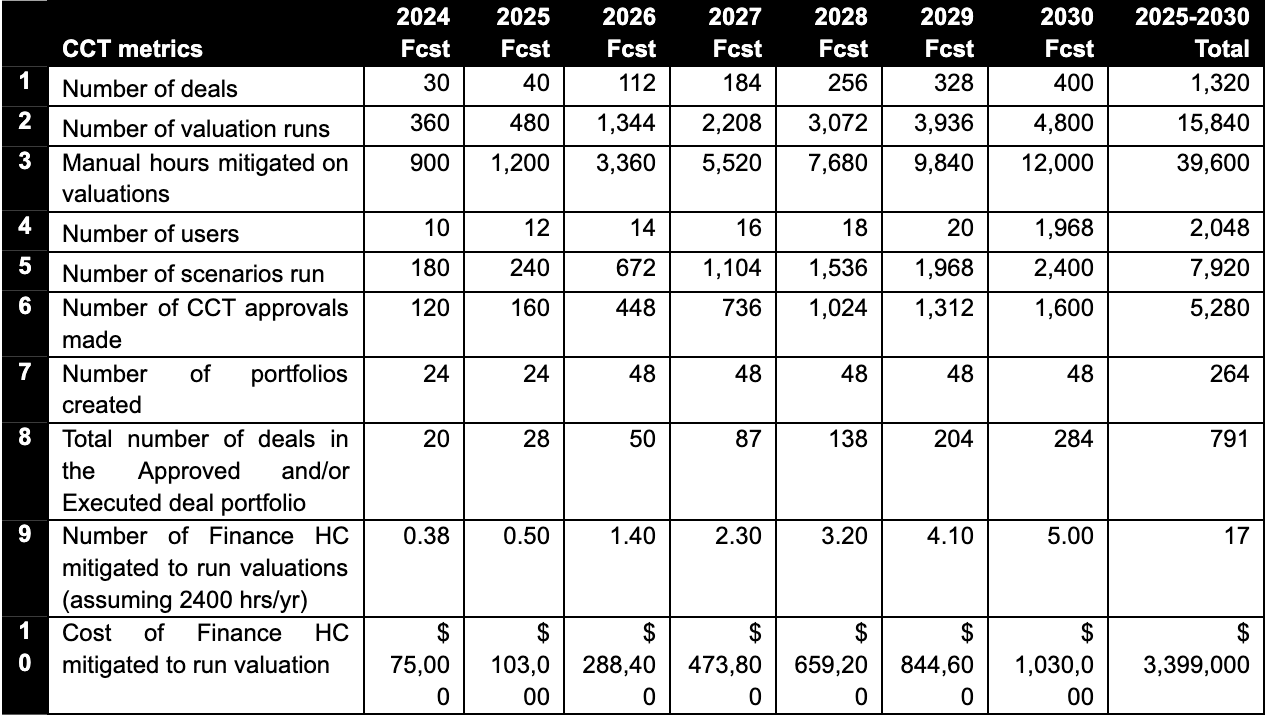
Forecasted metrics outlining $3.4M in savings
UX process timeline

Challenge
Amazon's carbon credit program, valued at ~$500M and projected to reach $2B by 2030, lacked centralized financial management infrastructure.
- Scattered data management: Deal information spread across Quip, Excel, WorkDocs, and email.
- Manual forecasting risks: Hand-calculated valuations for a $500M portfolio introduced financial and compliance vulnerabilities.
- Deal negotiation delays: Lack of real-time financial data slowed legal approvals and business decisions.
- No portfolio visibility: No unified view or audit trail to track performance, compliance, or optimize investment strategies.
Solutions
My involvement defined the business requirements, and I designed an MVP of a centralized platform enabling users to:
- Upload deal inputs and view valuation output for deal reviews
- Perform scenario modeling of inputs for deal negotiations
- Generate deal-level P&Ls, portfolios, and portfolio-wide supply forecasts
- Maintain data types, from market price curves to bulk valuation runs
- Approve deals and portfolios
"How might we help Amazon's carbon credit team make informed investment decisions by providing clear visibility into their deal pipeline performance and supply forecasting?"
Understanding the problem space
I led 3 collaborative UX workshops with cross-functional partners and Finance stakeholders to understand pain points, generate preliminary ideas, and define business requirements. Users needed deal-level P&L generation, portfolio-wide supply forecasting, scenario modeling for negotiations, Salesforce integration, and strong audit trails.
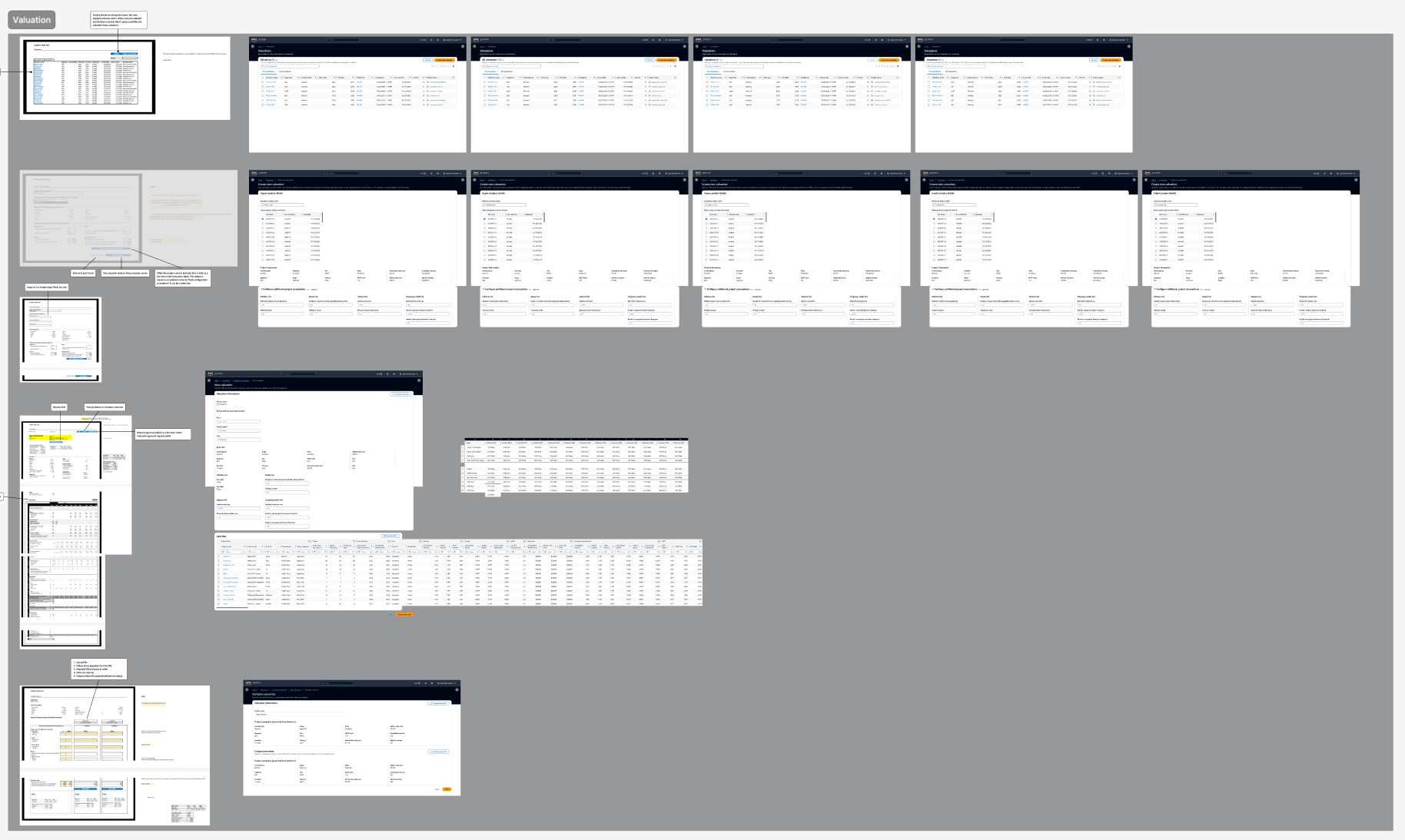
Whiteboard sessions with Product and stakeholders
Highlighting user needs
CCT serves two user groups: Deal Leads from the Carbon Neutralization team (primary), who negotiate and manage renewable energy contracts and need self-service deal modeling and fast sensitivity analysis; and WWSF Finance Managers (secondary), who review and approve valuations, maintain global assumptions, and generate cash flow forecasts.
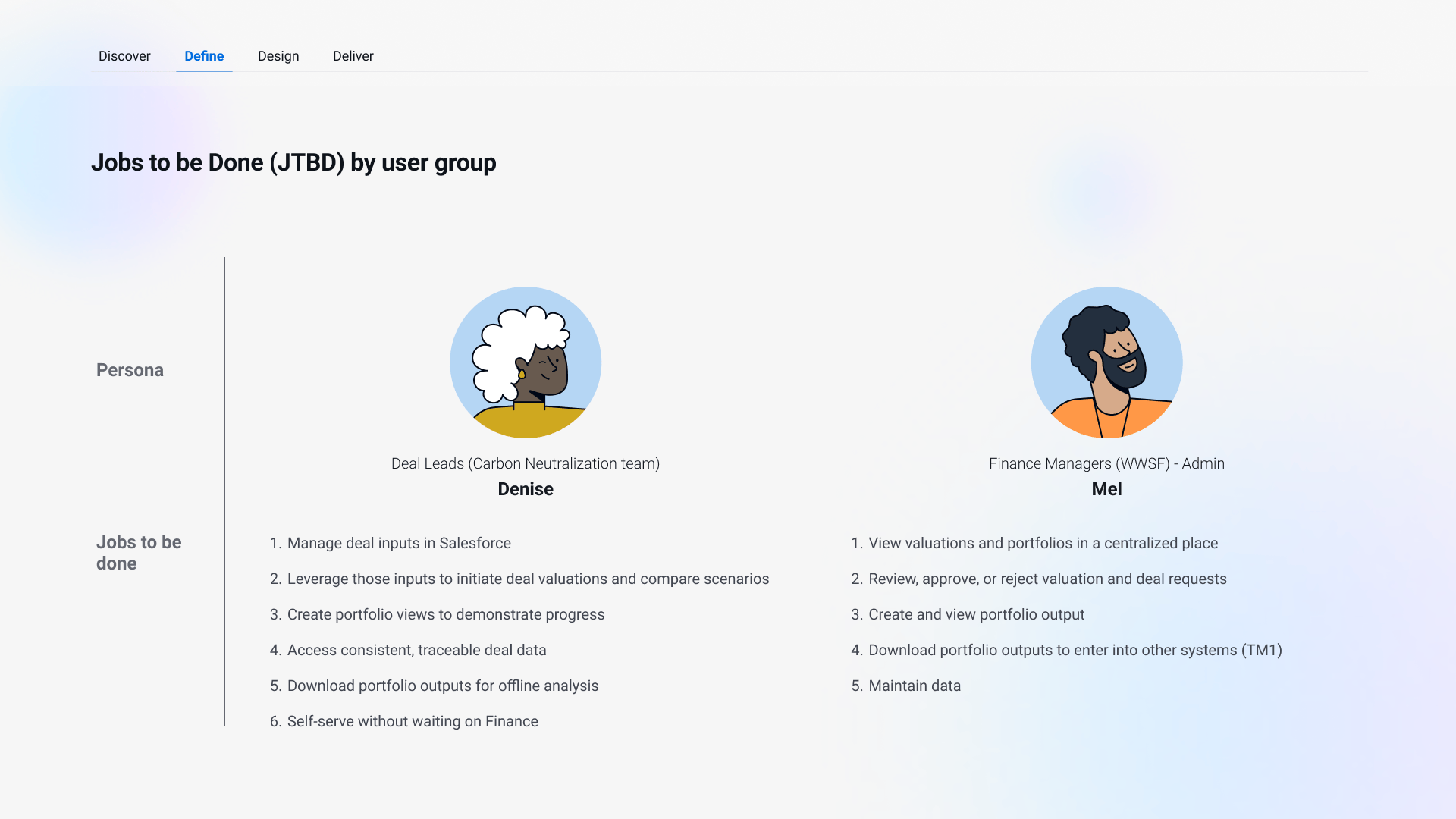
Information architecture & wireframing
I mapped out an information architecture to establish the product's navigational structure, then created low-fidelity wireframes to validate early concepts with stakeholders.
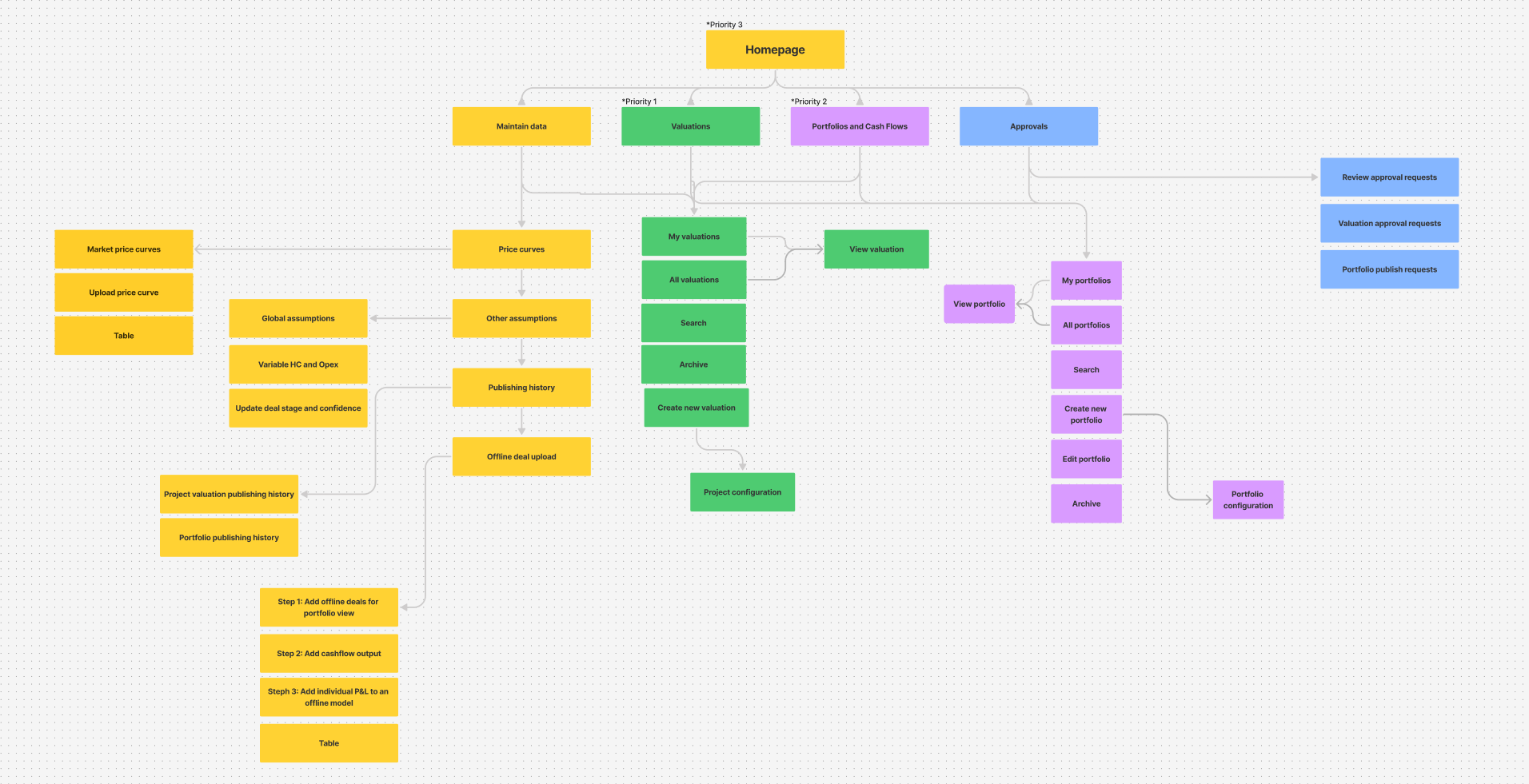
Information architecture map to envision site structure
Stakeholder co-creation & iteration
I designed each workflow, built interactive prototypes for core user flows, and conducted 5 co-creation sessions plus 3 stakeholder design reviews with Product, Engineering, and stakeholders to refine designs and ensure alignment with business needs.
Design solutions
My designs enable users to generate valuations and forecast supply, model deals, maintain data, approve deals and portfolios, and optimize sell-off strategies across 6 features:
Homepage
Centralized display with clear navigation to key features and onboarding information.
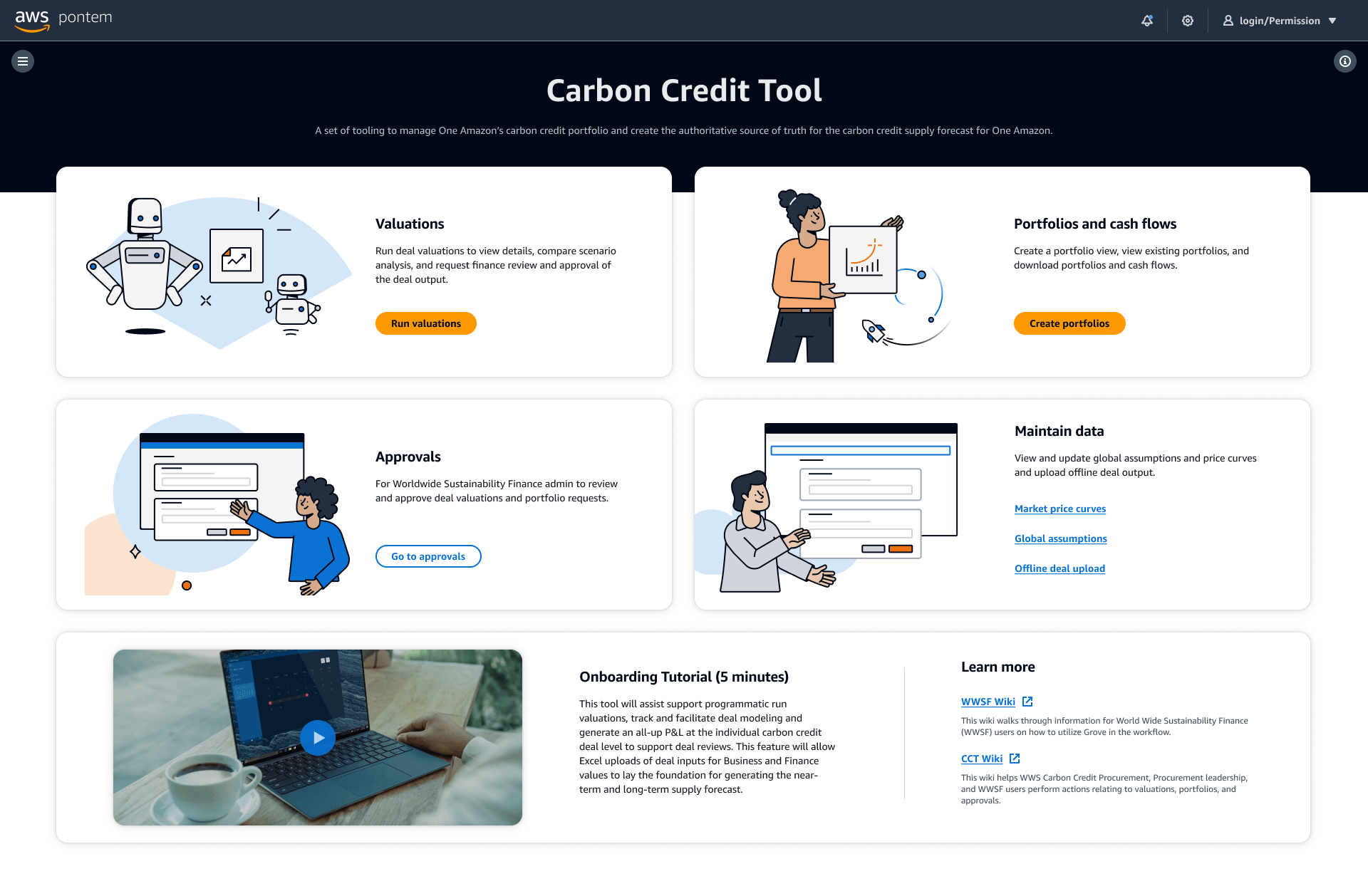
Dashboard layout for quick access
Deal input & valuation
Upload deal parameters and generate valuation outputs for deal reviews, with a step-by-step creation process, Salesforce integration, and P&L visualization.
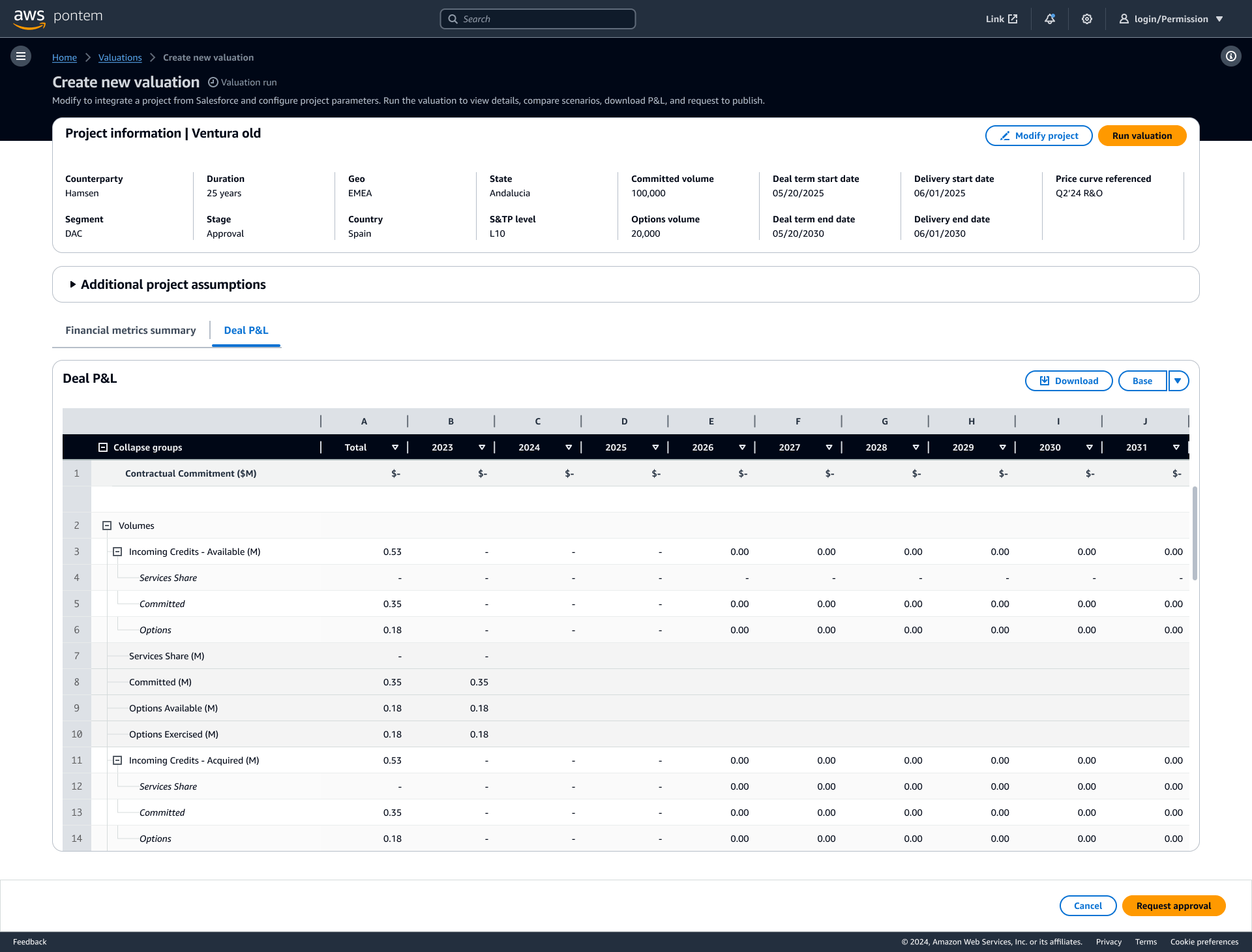
P&L output after creating a valuation
Scenario modeling
Test multiple input variations for negotiation strategy — Excel upload, an NPV ranking system, and price/volume scenario analysis.
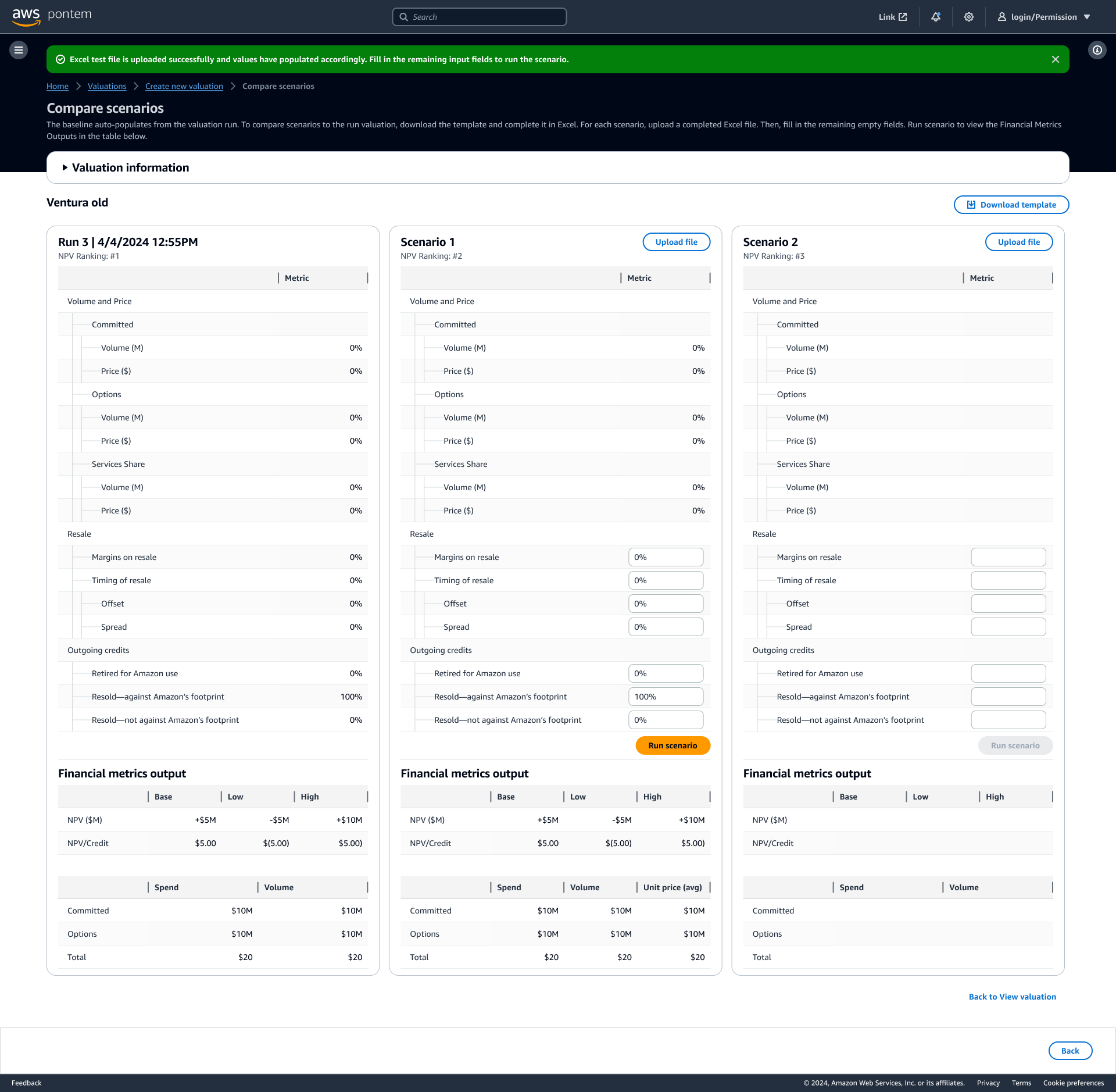
Side-by-side comparison of different scenarios
Portfolio management
Create deal-level P&Ls and portfolio-wide supply forecasts, with a step-by-step creation workflow and cash flow download options.
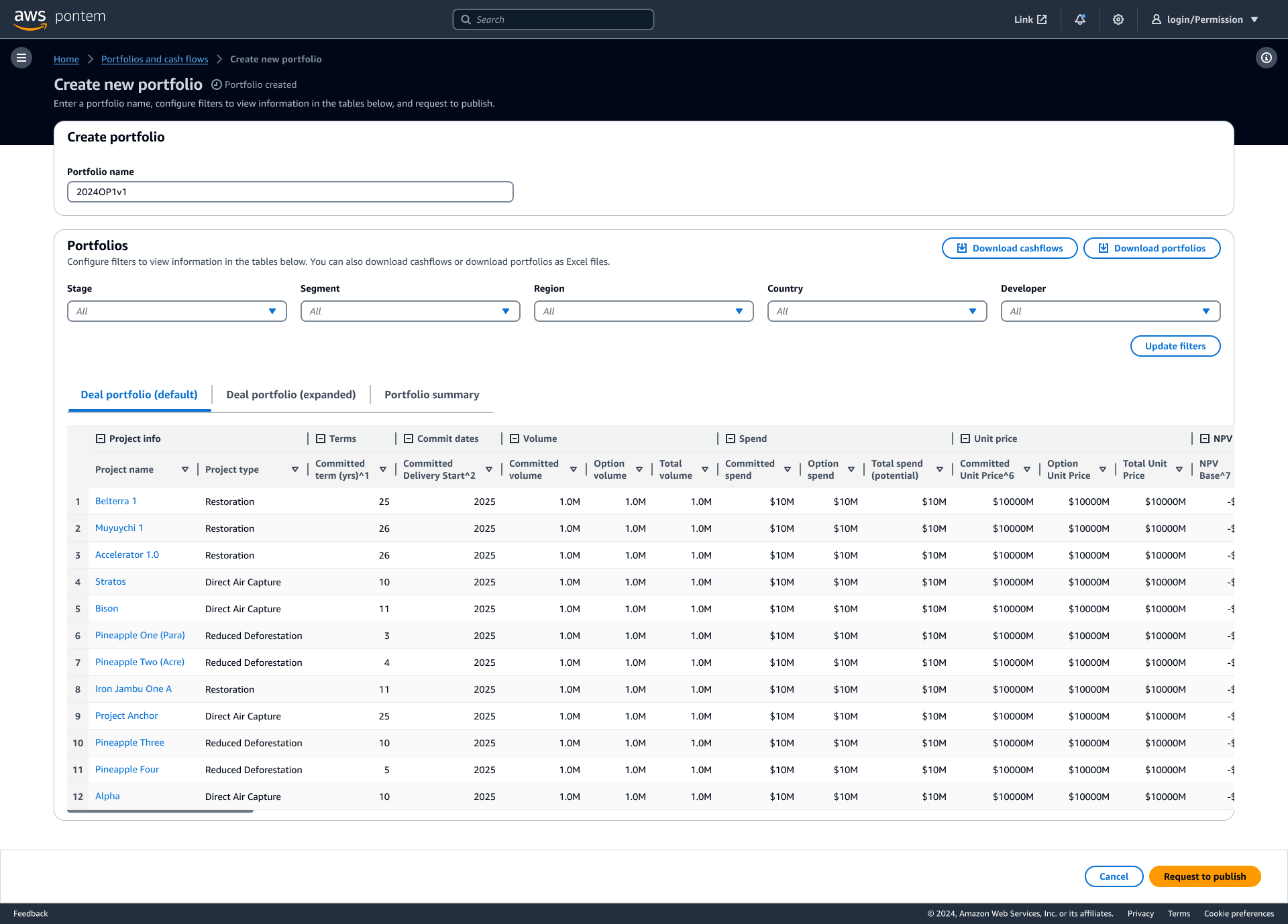
Tabs for different portfolio data views
Data maintenance
Manage market price curves, assumptions, and offline deal uploads.
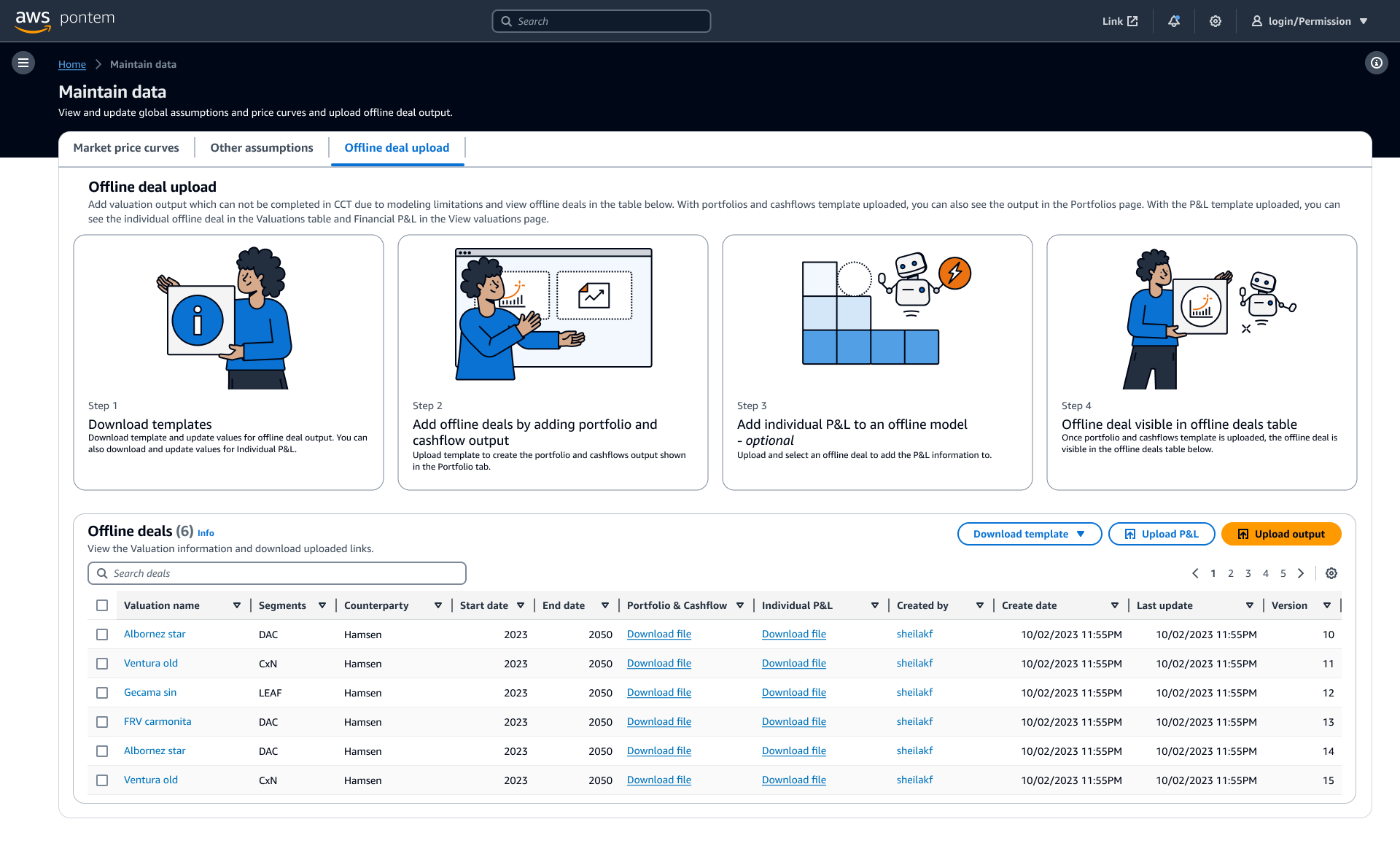
Instructions to upload offline deal and P&L files
Approval workflows
Streamlined deal and portfolio approval processes for both deal and portfolio-level actions.
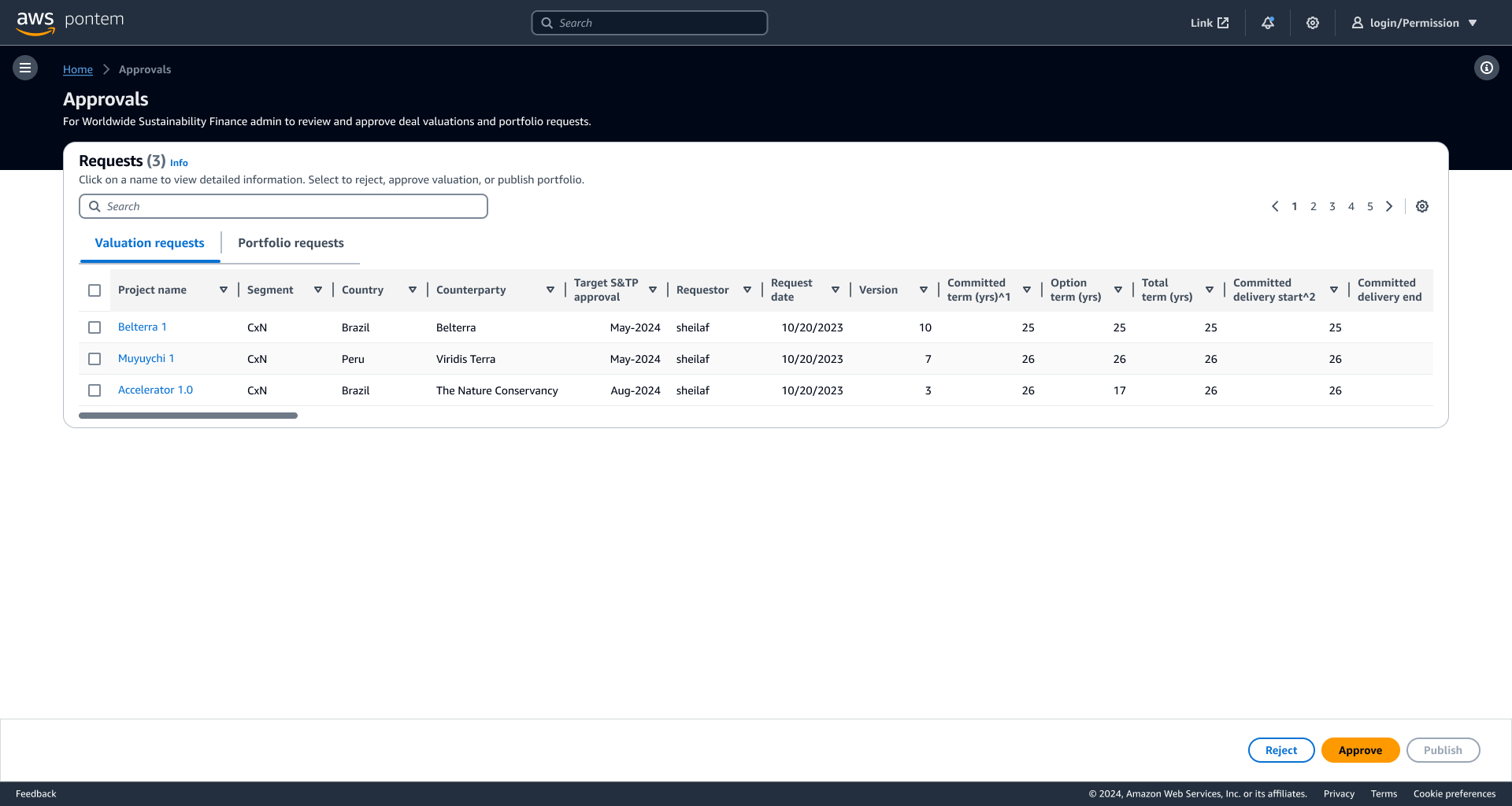
WWSF Finance Managers can select to approve valuations or publish portfolios
Current project & product status
Following design completion and developer handoff, engineering capacity limitations prevented immediate build-out. An organizational restructure subsequently moved this product to Amazon Sustainability Fintech. The design strategy and framework I delivered provided the groundwork for the team's future carbon portfolio management approach.
This experience — and the importance of a strong dev handoff — later prompted me to create a UX <> Engineering Handoff Guide, now adopted by the entire R&D team as part of our SOP.
Personal takeaways
This project marked my first opportunity to design a complete product from conception to handoff — leading stakeholder workshops, defining product requirements, and testing designs while using scalable components.
Early, constant UX involvement is key: Working closely with stakeholders from the start helped shape both product vision and technical requirements.
Building from scratch is exciting but requires thinking big: With no existing platform to reference, I had to think holistically about user needs and business impact while balancing creative freedom.
Organizational realities: External factors like resource constraints and restructuring can impact project outcomes regardless of design quality — emphasizing the importance of delivering comprehensive, transferable work.